What are service robots for hotels, hospitals and malls?
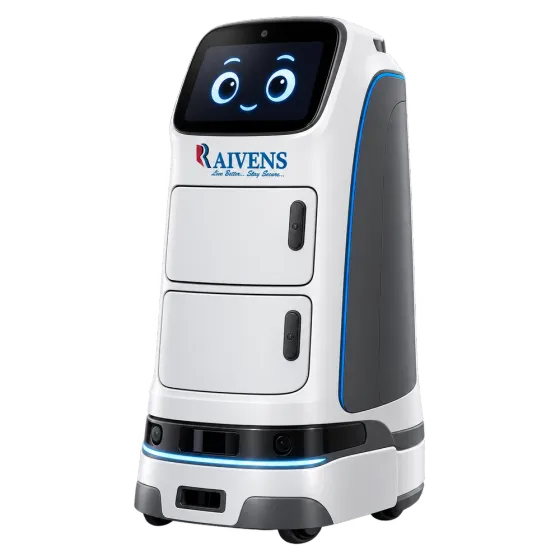
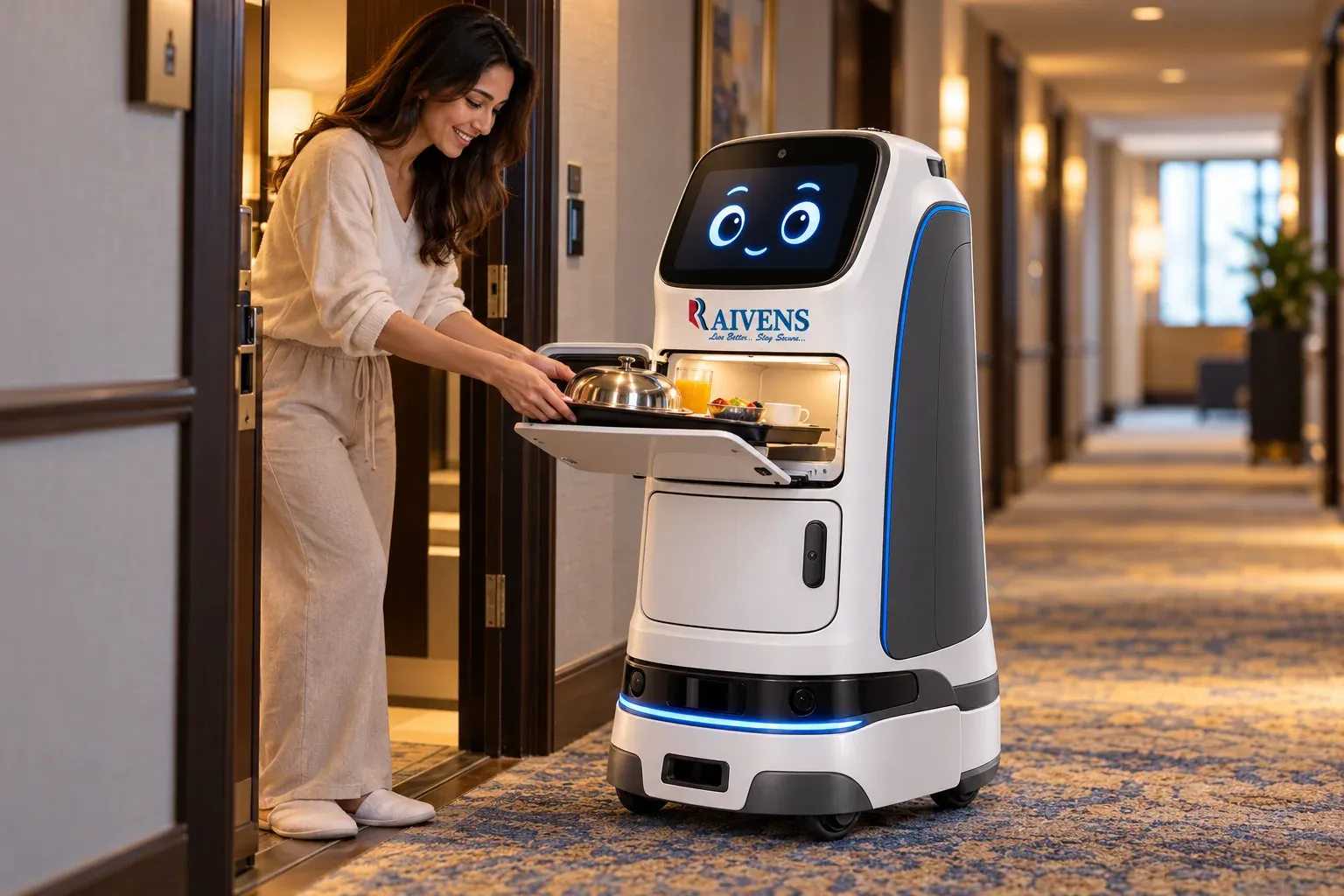
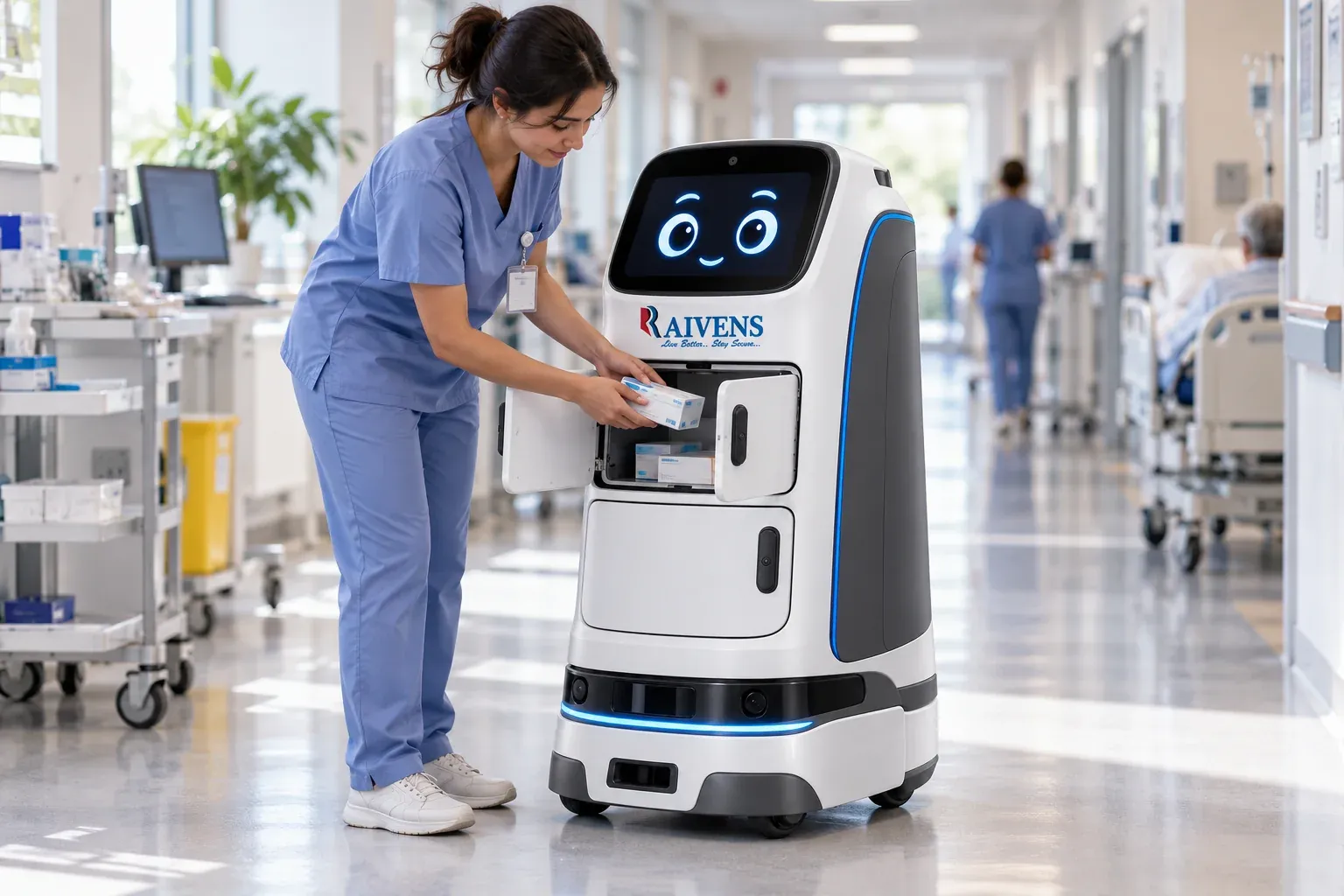
Service robots are autonomous indoor robots that deliver items and guide people in busy buildings. RAIVENS service robots carry room-service orders, medicines, lab samples and supplies, and they greet and guide visitors in hotels, hospitals and malls. Each robot navigates by LiDAR on a ROS 2 software stack, carries loads in open trays or lockable compartments, and reports to one fleet dashboard. Raivens designs the electronics, firmware, software and apps in-house and supports every site after go-live.
Why service robots matter
In hotels and hospitals, skilled staff spend part of every shift simply walking. Nurses fetch medicines and carry samples to the lab. Runners take towels, chargers and meals up and down the floors. Each trip is short, but together they pull people away from patients and guests. A service robot takes over these routine runs, follows the same process every time and logs each delivery. Staff keep the work that needs a person: care, conversation and judgment.
Key capabilities
- LiDAR navigation. The robot maps each floor once, plans its own routes, steers around people and obstacles, and slows down in zones you mark. In most buildings, no floor tape or rails are needed.
- Lockable compartments. Compartments stay closed in transit and open only for the intended recipient, which matters for medicines, samples and guest orders.
- Touchscreen face and voice. A front screen shows status, menus and promotions, and voice prompts tell people what the robot is doing.
- In-room ordering for hotels. A guest touchscreen in the room sends room-service and amenity orders that the robot brings to the door.
- Fleet dashboard. One dashboard shows each robot’s location, battery, tasks and alerts, and keeps a delivery history.
- Elevators and doors. On request, robots call elevators and open automatic doors to work across floors and wings.
Because the software is built on ROS 2, new routes, behaviors and integrations are added in software as your operation changes.
Built for hotels, hospitals and malls
The same platform is configured differently for each setting.
| Setting | Main tasks | Features used most | Typical integrations |
|---|---|---|---|
| Hotels | Room-service and amenity delivery, lobby guidance | In-room touchscreen ordering, lockable compartments, voice prompts | Elevators, ordering and property management systems |
| Hospitals | Medicine, sample and supply runs between pharmacy, labs and wards | Lockable compartments, delivery log, scheduled runs | Elevators, automatic doors, hospital task systems |
| Malls | Visitor guidance, concierge questions, promotions | Touchscreen directory, voice greeting, campaign content | Store directory and promotion content |
In a hotel, robots absorb the breakfast rush and the late-night towel request. In a hospital, they run the pharmacy-to-ward loop on a schedule and on demand, which cuts the distance nurses walk. In a mall, a guide robot answers common questions, walks visitors to stores and carries promotions for tenants.
Integration and support
Every project starts with a site survey and a LiDAR map. Raivens then configures compartments, screens and voice prompts, connects elevators, doors and hotel or hospital software where needed, and trains your staff. After go-live, the fleet dashboard and the Raivens support team keep robots on their routes, roll out software updates and adjust maps when layouts change.
Planning robots and drones together? The Robotics & Drones solutions page shows how they fit, and drone technologies cover outdoor inspection and mapping. For building sensors and smart alarms, see IoT-based products; for tenant and floor sub-metering, see smart electricity meters. To plan a pilot, contact our team; existing customers can reach support.