What are robotics and AI kits for schools and kids?
Robotics and AI kits are hands-on hardware sets that children build, wire and program to learn coding, electronics and artificial intelligence. RAIVENS robotics and AI hardware kits include Wi-Fi and Bluetooth robot car kits, sensor packs, AI camera add-ons, drone kits and competition kits. Learners start with block coding and progress to Python and C++. For schools, Raivens combines the kits with curriculum, lab setup and teacher training as STEM lab packages.
Why hands-on kits matter
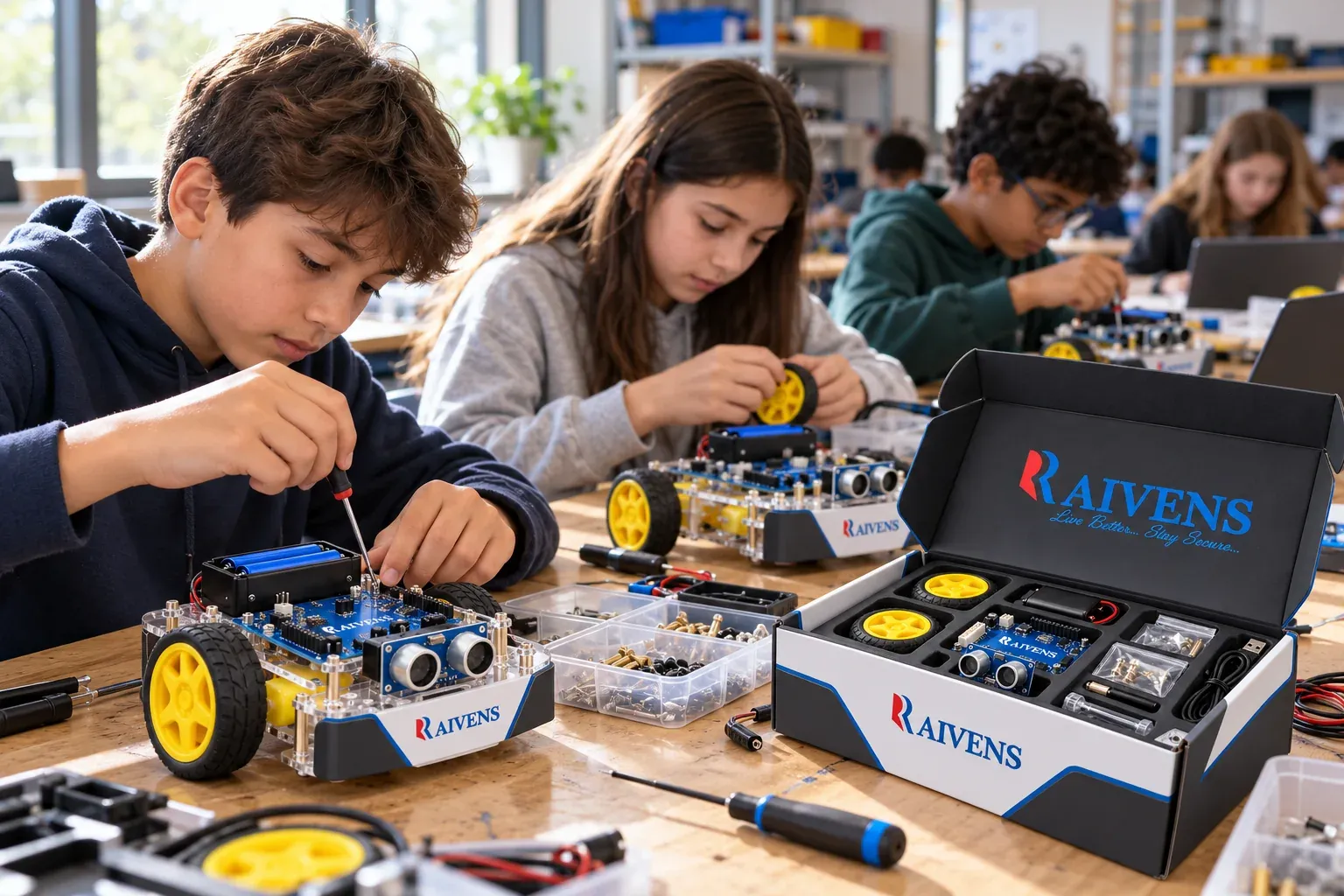
Coding makes sense to children when the code moves something. A robot that stops at a wall, follows a line or recognizes a face turns an abstract idea into a result they can see. Kits also teach problem-solving, teamwork and patience, because real hardware needs testing and adjustment. And because the kits are organized in levels, a student who starts at 8 can still be learning something new at 16.
Kit levels
| Level | Typical learner | Kits | Coding | Example projects |
|---|---|---|---|---|
| Beginner | About 8 to 10 years, new to coding | Robot car kit with basic sensors | Block coding | Obstacle-avoiding car, line follower |
| Intermediate | About 11 to 13 years | Robot car with sensor packs and an AI camera add-on | Blocks moving to Python | Color sorter, face-following robot, smart home model |
| Advanced | About 14 to 16 years and up | Competition kits, AI camera, drone kits | Python and C++ | Maze solver, autonomous competition robot, programmed drone flight |
What is in a robot car kit?
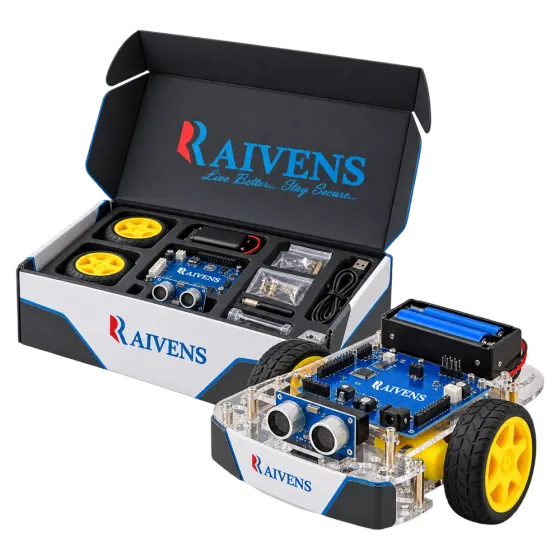
A typical robot car kit includes a chassis, geared motors and wheels, a Wi-Fi and Bluetooth microcontroller board, a motor driver, a rechargeable battery pack, starter sensors, cables and a step-by-step guide. Students can drive the car from a phone or tablet and program it from a laptop. Exact contents vary by kit, and variants are available on request.
Key capabilities
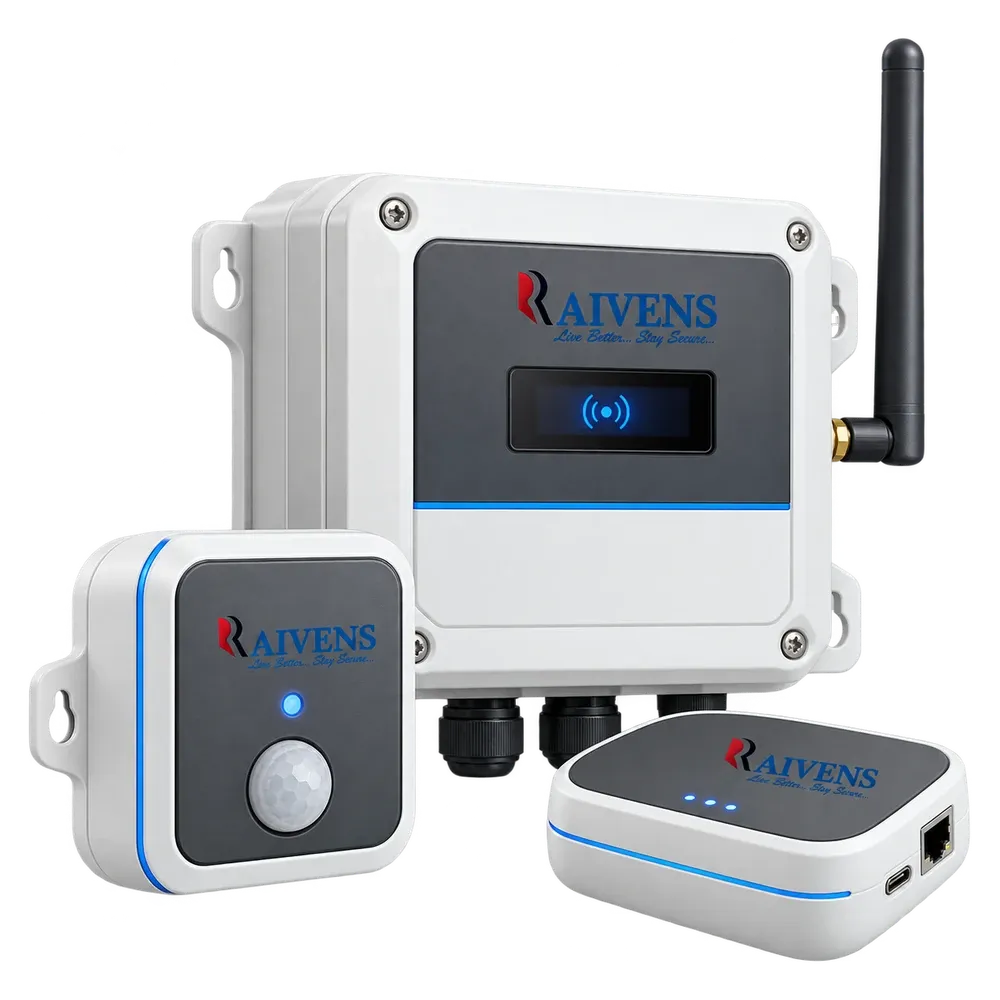
- Sensor packs. Distance, line-tracking, light, sound, temperature and motion sensors add new skills as projects grow.
- AI camera add-ons. Camera modules recognize colors, lines, faces and objects, bringing AI into robotics projects.
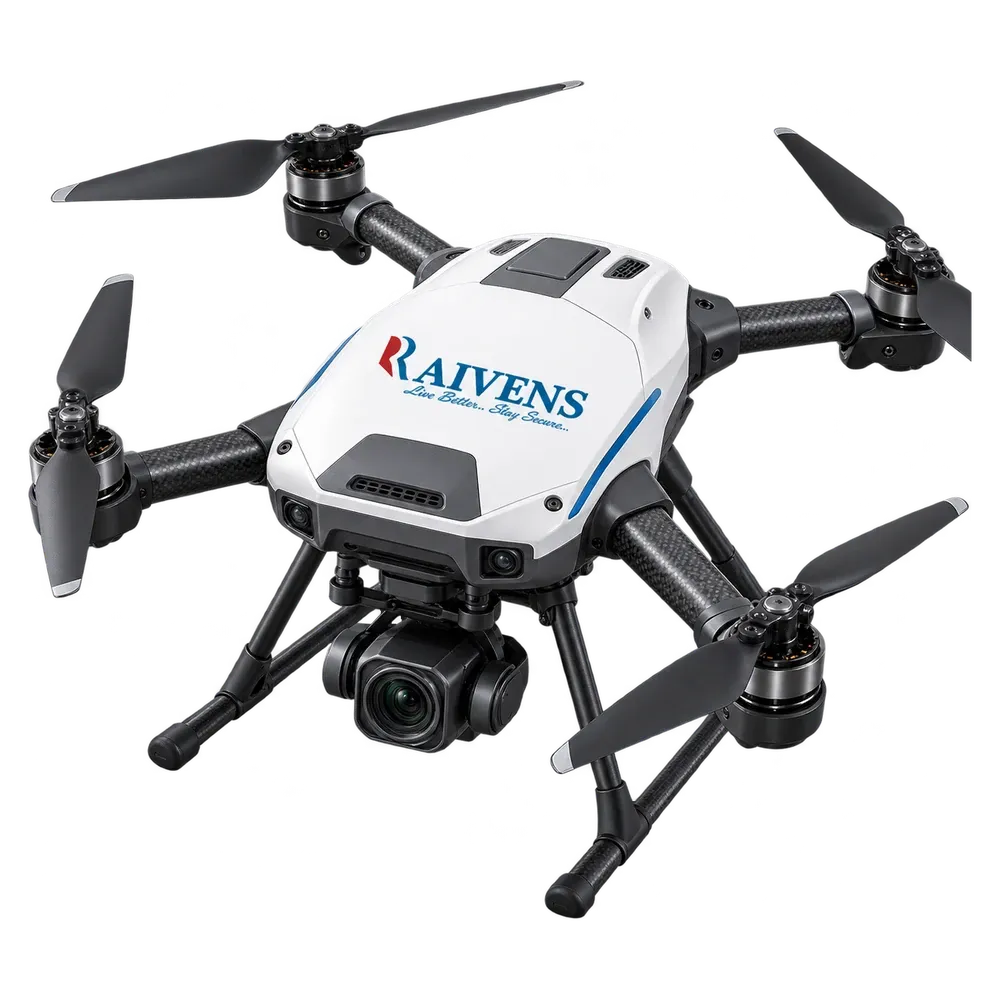
- Drone kits. Small programmable drones teach flight basics, control and safe flying.
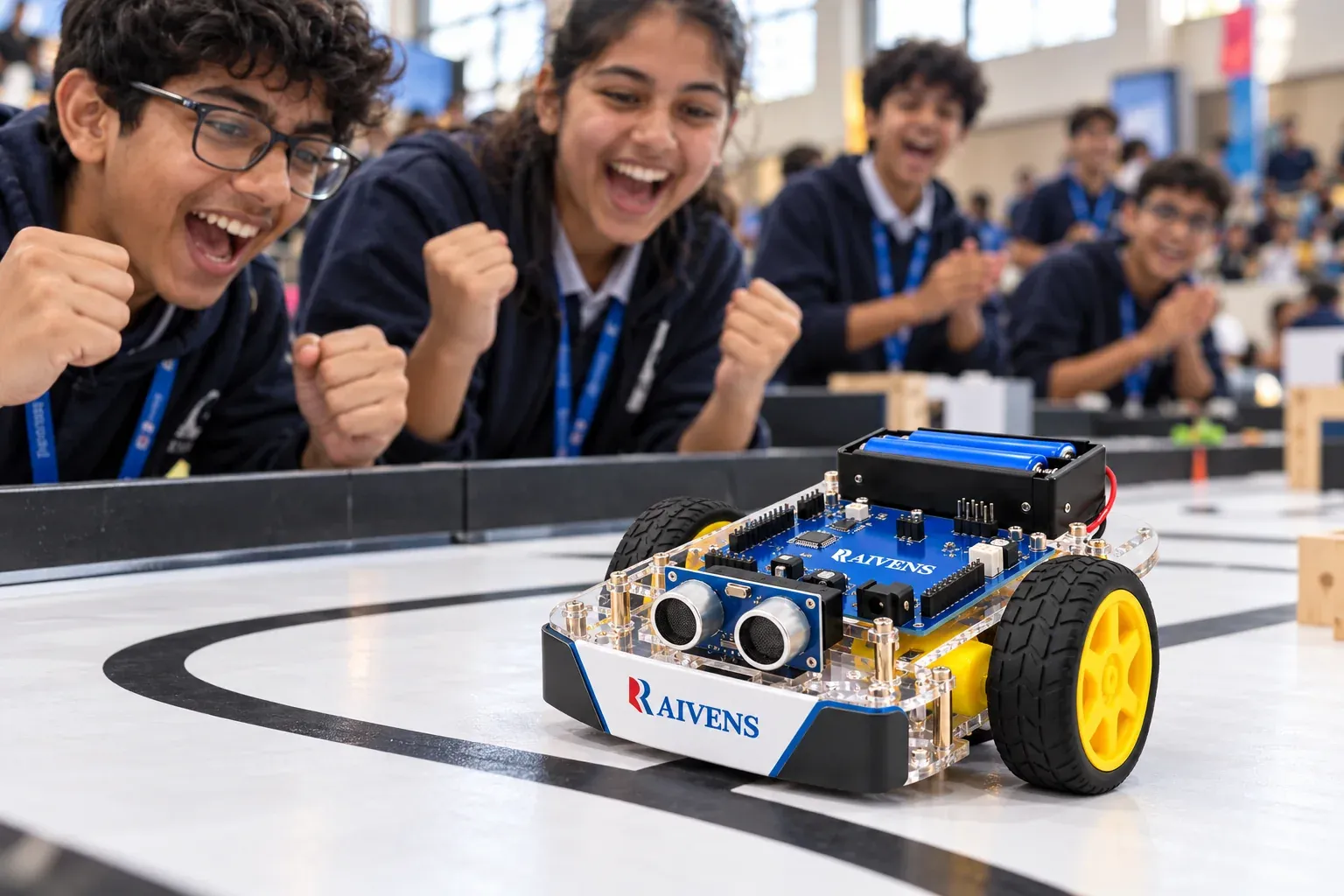
- Competition kits. Kits for line-following, maze, sumo and soccer events help teams prepare and practice.
- Curriculum by level. Lesson plans and project guides help teachers and parents guide learners without prior robotics experience.
Choosing the right kit
Start from the learner, not the parts list. Age and coding experience decide the level. Class size and timetable decide how many kits a school needs, and pairs or small teams sharing one kit keep everyone hands-on while building teamwork. Goals such as competitions or AI projects decide which add-ons come next.
Built for schools, clubs and homes
For schools, a STEM lab package combines class sets of kits, spares, curriculum, lab setup and teacher training. Robotics clubs use competition kits to train teams. At home, parents can pick a kit that grows with a child, from blocks to Python. The kits work alongside the AI education program for kids, and the drone kits connect to drone technologies from the same engineering team.
Integration and support
Raivens designs the kits in-house, so hardware, curriculum and software are built to work together. The support team helps with setup questions and replacement parts. To plan a lab or order class sets, contact our team. The AI & Robotics Education page shows how kits, curriculum and training fit together.