Skip to content
®
EV Charging & Energy

AC EV Chargers

Smart AC wallboxes from 3.3 to 22 kW for homes, offices, apartments and hotels, with RFID, app control and load management.

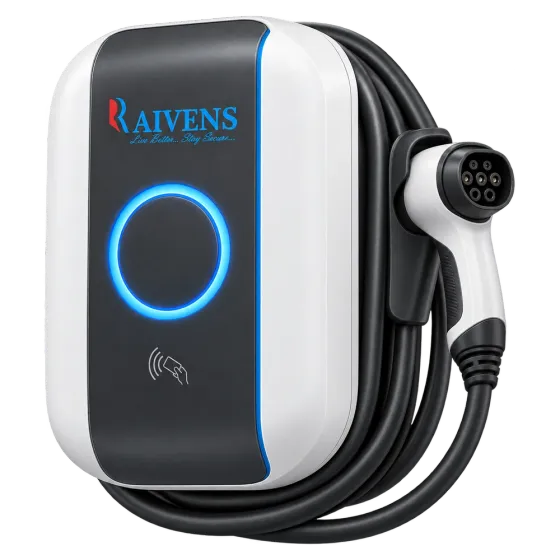
The RAIVENS AC EV Charger is a wall-mount or pedestal wallbox, from 3.3 kW single-phase to 22 kW three-phase, that charges parked electric vehicles with RFID or app control for homes, offices, apartments and hotels.

AC EV Chargers
Single-phase
3.3 to 7.4 kW
Three-phase
11 or 22 kW
Connector
Type 2 socket or tethered cable
Access
RFID card or app
Connectivity
Wi-Fi, 4G or Ethernet
Mounting
Wall or pedestal
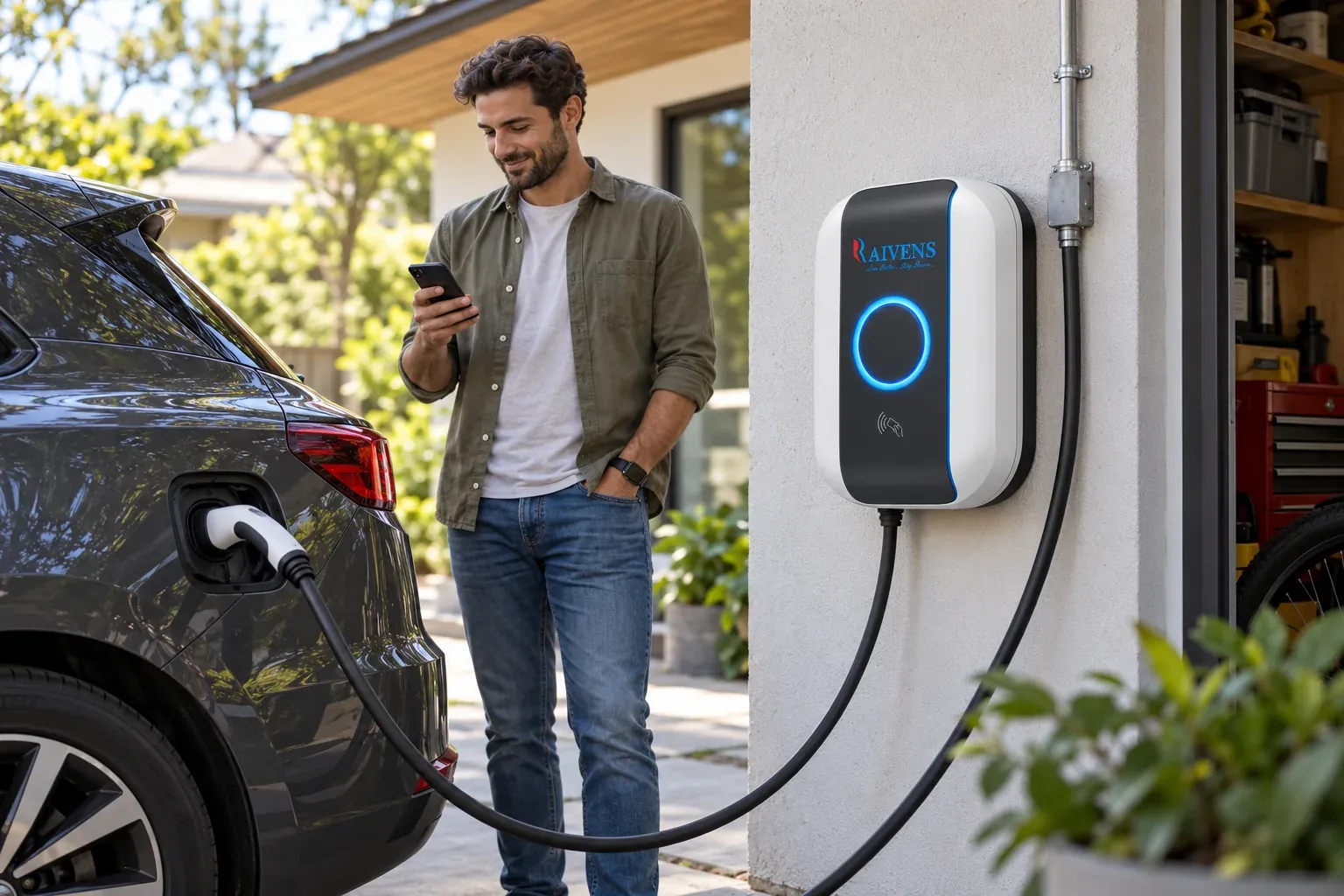
RAIVENS AC wallbox installed on a home garage wall charging an electric car
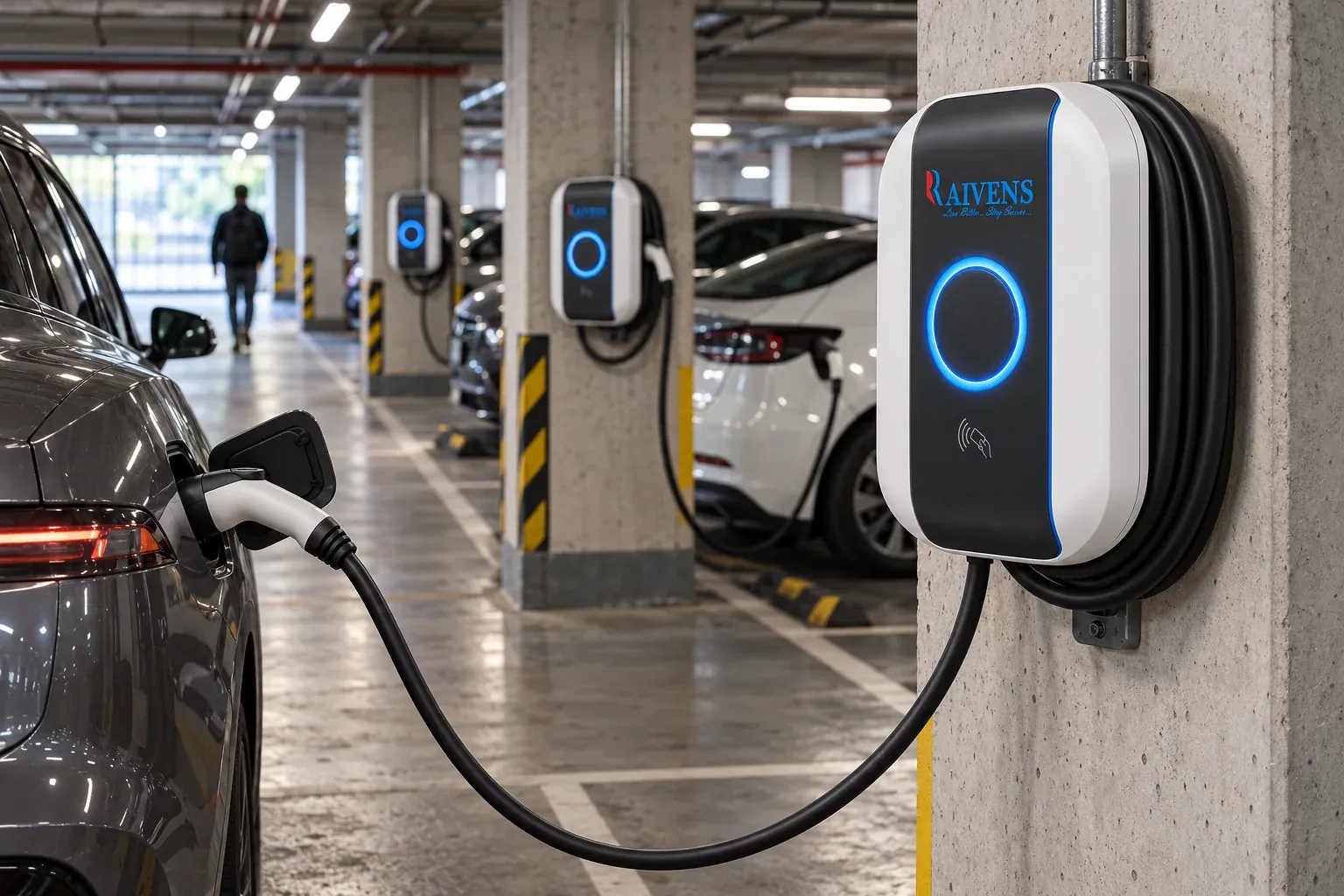
RAIVENS AC wallboxes on car-park pillars charging employee electric cars
Capabilities

Why choose RAIVENS AC EV Chargers

Single- and three-phase models

Choose 3.3 to 7.4 kW single-phase units for homes, or 11 and 22 kW three-phase units for commercial sites.

Wall or pedestal mounting

Wall-mount units fit garages and covered parking, while pedestal units stand in open car parks and driveways.

Socket or tethered cable

An untethered Type 2 socket suits shared sites, while a tethered cable saves drivers from carrying their own.

RFID and app control

Authorize users with RFID cards or the app, and start, stop and review sessions from a phone.

Wi-Fi, 4G or Ethernet

Keep chargers online through whichever network the site has, for app control and remote management.

Charging schedules

Schedule charging for off-peak tariff hours or for times when the building's demand is low.

Load management

Keep charging within the supply available on site, so adding chargers does not overload the building connection.

What are AC EV chargers?

AC EV chargers, often called wallboxes, supply alternating current to an electric vehicle, and the car’s onboard charger converts it to direct current for the battery. AC charging costs less to install than DC fast charging and suits places where cars stay parked for hours, such as homes, offices, apartments and hotels. Raivens designs and builds AC EV chargers in-house, from 3.3 kW single-phase units to 22 kW three-phase models, in wall-mount and pedestal versions.

Power options

Power Supply Energy per hour at full output Typical setting
3.3 kW Single-phase Up to 3.3 kWh Homes, overnight parking
7.4 kW Single-phase Up to 7.4 kWh Homes, offices, apartments
11 kW Three-phase Up to 11 kWh Offices, apartment car parks, hotels
22 kW Three-phase Up to 22 kWh Hotels, workplaces, retail and fleet parking

Single-phase options span 3.3 to 7.4 kW. The vehicle’s onboard charger sets the highest AC rate it accepts, so a car limited to 7.4 kW charges at 7.4 kW even on a 22 kW wallbox. Match the charger to the vehicles you expect, with room for the next ones.

How to choose

Three questions settle the choice:

  1. What supply do you have? Single-phase sites use 3.3 to 7.4 kW models. Three-phase sites can add 11 or 22 kW.
  2. Who will charge? A private home rarely needs access control. Shared sites need RFID or app authorization.
  3. How many chargers? Two or more units on one connection usually call for load management.

Built for homes, offices, apartments and hotels

  • Homes. A 3.3 or 7.4 kW wall-mount unit charges overnight, and schedules move charging into off-peak tariff hours.
  • Offices. Staff charge during the workday, and RFID cards or the app decide who can plug in.
  • Apartments. Shared car parks need access control and fair cost sharing. RFID or app control ties each session to a resident, and smart electricity meters can bill the energy per user.
  • Hotels. Pedestal chargers at 11 or 22 kW let guests charge overnight, an amenity for guests who drive electric.

Key capabilities

  • Type 2, socket or tethered. An untethered socket suits shared sites where drivers bring their own cable. A tethered cable is the easy choice at home.
  • Wi-Fi, 4G or Ethernet. Chargers stay online through the network the site already has, for app control and remote management.
  • Scheduling. Charging windows can follow off-peak tariffs or quiet building hours.
  • Load management. When several chargers share one connection, load management keeps total demand within the available capacity. This can delay or avoid a costly supply upgrade.

Installation and support

Raivens supports the site check, installation and commissioning, and provides after-sales support from the same in-house team that designs the hardware and firmware. Compliance documentation per model is available on request.

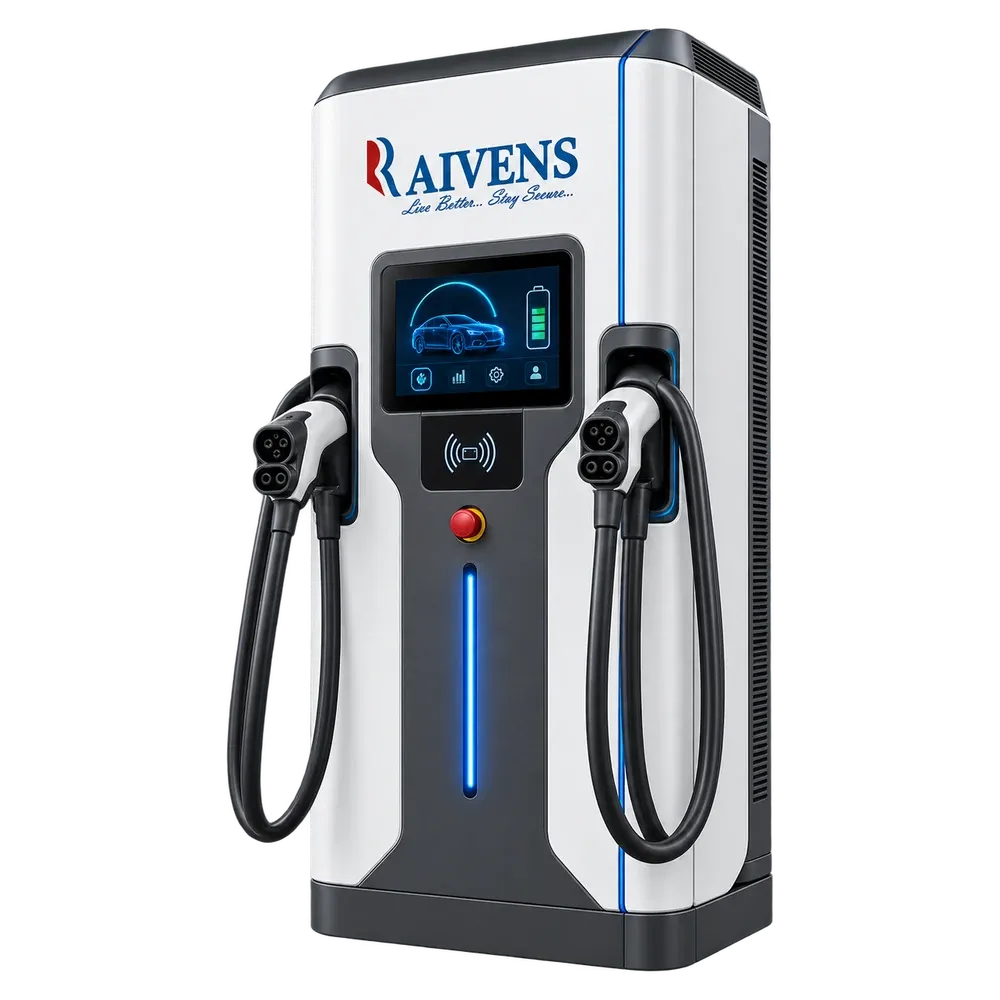
For quick stops on highways and at fleet depots, see the DC fast EV chargers. Explore the full EV charging and smart energy solution, or contact Raivens to plan your chargers.
Use cases

Where it makes a difference

Homes and villas

A 3.3 or 7.4 kW wall-mount charger charges the car overnight, and schedules shift charging into off-peak hours.

Offices and workplaces

Staff charge during the workday, and RFID cards limit access to authorized employees.

Apartments and residential communities

Shared car parks link each session to a resident through RFID or the app, and load management protects the building supply.

Hotels and resorts

11 or 22 kW pedestal chargers let guests charge overnight, adding an amenity for guests who drive electric.

Retail and fleet parking

Customers and delivery vehicles top up while parked, with access and schedules managed from the app.

Specifications

Technical overview

Power options

Single-phase3.3 to 7.4 kW
Three-phase11 kW or 22 kW

Connector and mounting

ConnectorType 2 socket (untethered) or tethered cable
MountingWall-mount or pedestal

Connectivity

NetworkWi-Fi, 4G or Ethernet (options by model)

Control and energy management

Access controlRFID card or mobile app
SchedulingTime-based charging schedules
Load managementKeeps charging within the capacity available on site

Service and documentation

ServicesSite check, installation support, commissioning, after-sales support
DocumentationCompliance documentation per model is available on request

Specifications are indicative and vary by model and configuration. Contact us for the datasheet of the exact variant.

FAQ

AC EV Chargers: common questions

What power rating should I choose for an AC EV charger?

Choosing an AC EV charger starts with the electrical supply and the vehicles. Homes with a single-phase connection typically use 3.3 to 7.4 kW chargers. Sites with three-phase power, such as offices, apartment car parks and hotels, can use 11 or 22 kW. The car's onboard charger caps the AC rate, so a higher-rated wallbox only helps vehicles that accept more power. Raivens recommends a rating after checking your supply and expected vehicles.

Will a 22 kW AC charger charge my car faster than a 7.4 kW one?

A 22 kW AC charger is faster only if the car's onboard charger accepts more than 7.4 kW. With AC charging, the vehicle converts alternating current to direct current itself, so its onboard charger sets the maximum rate. A car limited to 7.4 kW charges at the same speed on a 7.4 kW or a 22 kW wallbox. Raivens suggests matching the charger to the vehicles you expect, with some headroom for future models.

What is the difference between a socket and a tethered EV charger?

A socket charger has an untethered Type 2 outlet, and each driver plugs in their own cable. It suits shared sites such as offices and hotels, where vehicles and cables vary. A tethered charger has a cable fixed to the unit, so the driver only plugs into the car, which is convenient at home and for fleets. Raivens offers both versions of its AC EV chargers.

Can several AC chargers share one building's electricity supply?

Yes. With load management, several AC chargers can share one building connection, because total charging demand stays within the capacity available on site. Scheduling can also move charging to off-peak hours. For apartments and offices that add chargers in stages, this can delay or avoid a supply upgrade. Raivens sets the load limits and schedules for each site during commissioning.

How do apartments and offices control who uses the chargers?

Raivens AC EV chargers support RFID cards and app control. Residents or staff authorize a session with a card or a phone, so only registered users can charge, and each session is linked to a user. Hotels can hand out RFID cards at check-in in the same way. Where energy must be billed per resident or tenant, pair the chargers with smart electricity meters from the same range.

What network connection do the AC chargers need?

Raivens AC EV chargers connect over Wi-Fi, 4G or Ethernet, depending on the model and the site. Wi-Fi suits homes, Ethernet suits buildings with wired networks, and 4G works in open car parks where neither reaches. A connection enables app control and remote management. The team helps choose the right option during the site check, before any hardware is ordered.

Should I choose an AC or a DC EV charger?

Choose AC where vehicles stay parked for hours, such as homes, offices, apartments and hotels. AC chargers cost less to install, and the long stay gives them time to charge. Choose DC where drivers need energy during a short stop, such as highways, fleet depots and bus depots. Many sites combine both, and Raivens builds both, so one supplier can cover the whole site.

Related

Often deployed together

Get a quote

Planning a rollout of AC EV Chargers?

Share quantities, site details and timelines. An engineer replies within one business day with options and a quotation.

I would like

Protected by a privacy-friendly human check. No tracking cookies.

We reply within one business day. Prefer email? info@raivens.com

Let’s build what’s next, together

Tell us about your project. Our engineers reply within one business day with options, timelines and a quotation.